Monday, June 13, 2016

In the News: South Florida Gay News


San Francisco Stands With Orlando

SFGN Admin | David-Elijah Nahmod

Hundreds gathered in San Francisco's gay-centric Castro District to mourn the loss of LGBT life in Orlando. The vigil tool place at 8 p.m. on June 12, the day news of the mass shooting at Orlando's Pulse nightclub made headlines.

The vigil was supposed to take place at Harvey Milk Plaza at the corner of Castro and Market Streets, but so many people showed up that the vigil stretched across the street into Jane Warner Plaza, a small parklet named after the late San Francisco police officer Jane Warner, who was a lesbian.

People wiped away tears and held candles as the speakers took to the stage.

Openly gay San Francisco Supervisor Scott Wiener, who represents the Castro District said that guns were "a disease."

"The country is awash in guns," Wiener said, speaking from the podium. "I'm angry. We are here to recommit the fight to end anti-LGBT violence and to force congress to do something about the damn guns."

Supervisor David Campos, who is also gay, represents San Francisco's primarily Latin Mission District. "It's a very difficult day," Campos said. "As a gay Latino man this is shocking to me – we must make sure that the Latino community is not forgotten in all of this."

Most of the victims at Pulse were LGBT Latinos.

"We've gotten complacent," Campos continued. "People of color are often marginalized within the LGBT community. We don't want to be remembered just when we're massacred. We want to be remembered every day."
Campos reminded the crowd that Congress did nothing after school children were massacred at Sandy Hook Elementary School in Connecticut.
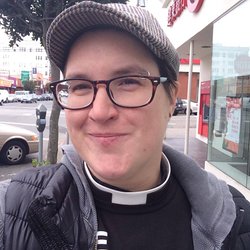
Pastor Megan Rohrer, the first openly transgender pastor to be ordained as the leader of a Lutheran congregation, also addressed the mourners.

"We are Queer, we are fabulous, we are beautiful," the Pastor shouted. "We must act up and stand up. Out of the bars and into the streets. Out of the churches and into the streets!"

"The NRA is a powerful group," said San Francisco's interim police chief Toney Chaplin. "I'm looking at a more powerful group. Get out and vote! If you see something suspicious, say something!

San Francisco resident Sal Navarrette, who is gay, spoke to SFGN. "The hate that's out there saddens me," he said. "I don't want people who hate to make me fearful. I want them to know they're uniting us."
Brandy Jane Rose, a 22-year-old transwoman, said that the killings in Orlando would not make her fearful of attending San Francisco Pride in two weeks.

"I cannot not give a shit anymore," she said. "The fight is not over. We cannot back down. We cannot let them win."

The vigil concluded with the mourners singing the Civil Rights anthem We Shall Overcome, which was followed by a march down Market Street to San Francisco City Hall.
David-Elijah Nahmod is SFGN’s correspondent in San Francisco.

In the News: Hoodline:

'We Must Remember Orlando': Thousands Attend Vigil For Massacre Victims, March To City Hall

“We’ve known gun violence before,” shouted Pastor Megan Rohrer to the thousands of people who gathered last night in the Castro to mourn the 50 people killed at an Orlando nightclub over the weekend. “Angry people of faith are not the majority. We are queer. We are transgender. We are fabulous, we are faithful. We must stand up. We must vote ... until everyone is safe in bathrooms, in churches, and in the fucking streets.”

The crowds at the vigil were so large that community members spilled out into the streets surrounding Harvey Milk Plaza, amassing along Castro Street just south of Market. An SFPD officer at the event estimated that 10,000 people were in attendance, though that number has not yet been confirmed by authorities.
Thousands gathered at Harvey Milk Plaza and on Castro Street in solidarity.
Photo: Nuala Sawyer/Hoodline
A diverse group of community organizers and politicians spoke to the crowd, many of whom were still reeling with grief, shock, and anger from a tragedy that had occurred just 21 hours earlier.

Sister Roma and Sister Mary Peter from the Sisters of Perpetual Indulgence accompanied Pastor Rohrer on stage for a religious perspective on the shooting. The Sisters called upon spiritual leaders across the country to “speak with compassion and love for all,” before wishing that current and future leaders have the “courage to end this cycle of mass violence and reject the politics of hate.”
Many held candles at the vigil. Photo: Nuala Sawyer/Hoodline
Local politicians who spoke at the event included Mayor Ed Lee, Senator Mark Leno, Supervisor Scott Wiener, and Supervisor David Campos. Campos, who is gay and Latino, spoke passionately on the struggles of queer people of color. "As a gay Latino man, it is not shocking to me that the biggest mass shooting would target the queer community, and also the Latino community," he stated.

“The thing about [the LGBT Latino] community is we are resilient," Campos said. "We have been through tough times, we are sticking together, and we are gonna keep fighting to make sure that this community is not forgotten.”
Photo: Nuala Sawyer/Hoodline
Campos railed against a sense of complacency in the queer community, in light of the recent legalization of gay marriage across the country. "We all have to recommit ourselves to the work that remains," he said. "We want our leaders to think of queer people of color not just when there's a massacre, but every single day." 

Like many of the other speakers, Campos expressed opposition to Islamophobia and xenophobia. “We are all in this together. I know that targeting the Muslim community is simply wrong, and we’re going to speak out against it."
Hundreds marched to City Hall. Photo: Shane Downing/Hoodline
“We need to be together. We need to carry on with the love our family and friends, our allies, lovers, whatever. We need to carry on. We need to battle,” said Latino Democratic Club president Lito Sandoval, who also stated that he and members of his community had to ask to attend and speak at the vigil, because they had not initially been invited. “Latino leaders were not contacted; we had to reach out.”
While, as Sandoval said, “the attack was on queer and Latino communities,” the crowd at the vigil was diverse. 

“Look around you, this is your community," Sandoval said. "We need to choose inclusiveness, choose love, choose each other, choose integrity, choose solidarity, and not allow us to erase each other. None of us are free until all of us are free."

Mayor Ed Lee also spoke at the vigil, amidst both boos and applause from the crowd. "Hatred will not drive out hatred, and darkness will not drive out the dark," he said. "I join you all to make sure that we lead the way, and keep our LGBTQ community safe."
Many marched to, and gathered at, a rainbow-lit City Hall following the vigil. Photo: Noah Whiteman/Hoodline
In addition to politicians, interim Police Chief Toney Chaplin, who was recently appointed after Chief Greg Suhr resigned, spoke briefly to attendees. "The NRA is a powerful group, but I am staring at a more powerful group," he said, drawing cheers from the crowd. 

Chaplin encouraged those in attendance to get out and vote for politicians who support gun control laws. “Get out there and go show your support for folks. We need to get this legislation in place to change the gun laws in this country,” he said.

But the largest applause from the crowd was reserved for Assemblyman Tom Ammiano, who opened his speech with the simple phrase "Fuck the NRA." Joking that the organization's moniker stands for "national real assholes," Ammiano's speech was filled with humor, but also powerful messages. "Is that a gun in your pocket?" he asked the crowd. "Because I'm not happy to see you."
The crowd began to march, peacefully, to City Hall.
Photo: Randall Sarafa/Hoodline
Shortly before 9pm, the SF Gay Men's Chorus led the crowd in song. As the speeches ended, hundreds of peaceful marchers slowly began to flow down Market Street towards City Hall. Although traffic was halted, drivers encouraged marchers with honks of solidarity.

Upon reaching City Hall, the mood remained somber as the names of victims were read aloud. “We must remember Orlando,” said one organizer. Before heading home, many left their candles, still lit, beneath the backdrop of City Hall's rainbow lights.
Marchers leave behind candles on a statue of Abraham Lincoln at City Hall.
Photo: Noah Whiteman/Hoodline
“We must remain strong and vigilant in the face of such hatred," said San Francisco Pride in a statement. "We must be good to one another, we must speak up for one another, and most importantly we must look out for one another."

“As members of the LGBTQ community, as Americans, and as those who believe in freedom and the rule of law, we must continue undeterred in our quest for full and equal rights for everyone. We are unbowed and unbroken by this attack, and will continue on in the memory of those who lost their lives for simply expressing their true selves.”
"We Must Remember Orlando." Photo: Shane Downing/Hoodline

Friday, May 20, 2016

In the News: Hoodline

Faith-Based Meetup Distributes PB&Js To The Castro's Hungry

“We can’t cure homelessness,” said Pastor Megan Rohrer. “But we can still be present and be visible out in our community. That was a big part of why we wanted to start having these gatherings.”

Rohrer helps to organize the San Francisco Faithful LGBTQ Meetup. The group comes together weekly for everything from bison walks in Golden Gate Park to wine tastings to wonton-making demos. But its most visible contribution is on Sunday afternoons, when members make 150 peanut butter and jelly sandwiches and distribute them to the Castro’s homeless. 

“It’s an opportunity for us to wear matching T-shirts, to let people know that people of faith are LGBT, and that we can be doing good things,” said Rohrer, who was the first openly transgender pastor ordained in the Lutheran church. Rohrer has been an advocate for homeless LGBT San Franciscans for more than 15 years.

“We really wanted to make it a safe space for anybody of any faith to do good work,” said James Rowley, who co-organizes the Meetup with Rohrer. Within a few days of creating the group, over 75 people had signed up; about 12 people turn out for any given meeting. 

The group decided to distribute PB&J "because it’s nutritious, it doesn’t spoil, and we can give [the homeless] two or three of them and leave them with them, whether they’re sleeping on the side of the street or we have a conversation with them.”

The nutrition is particularly important for homeless people who are HIV-positive. "They need protein, and a lot of the ways that they can get really sick is if their muscles kind waste away,” Rohrer said. “We wanted to make sure that there was a lot of protein, but also to respect the crunchy lesbians who also wanted something vegan.”

The group gets most of its supplies—bread, peanut butter, jelly, sandwich bags, hand wipes—from Grace, although the Meetup is not affiliated with the congregation. “It’s not costly, peanut butter and jelly,” Rohrer said.

The Meetup group gathers inside St. Francis Church, located right across from the Safeway on Market Street, on Sunday afternoons. “We walk up from the Safeway at Church Sr. and then we go all the way down to Castro and 18th. By then we’re usually out of sandwiches,” Rohrer said.

"That neighborhood has more homeless people than other parts of town, because San Francisco figures out how they’re going to divide up homeless services based on police districts," Rohrer said. “The neighborhood that gets the most complaints on the non-emergency police number gets the most homeless resources for that month.”

“The reason why we start at Church Street is because that’s the dividing line between four different police districts. A lot of people gather in that neighborhood because instead of getting pushed along too far, [police will] say, ‘Cross the street, that’s the other police district, and then they’ll have to deal with you.’”

Rohrer and Rowley say this area also attracts a lot of LGBT homeless people, who want to be near the company and safety of fellow LGBT individuals. 

However, not every sandwich is given to the homeless. If the group gets to 18th Street and still has sandwiches, they head to Dolores Park. According to Rowley, mothers with fussy children have stopped members of the group and asked for a sandwich. “We’ve stopped a couple of tantrums at 4 in the afternoon,” said Rohrer, laughing. 

“The whole event is two hours: an hour to make [the sandwiches], an hour to give [them] out to people, and then we spend an hour having a drink together at Harvey’s,” Rowley said. “We’re not preachy.”

Rohrer is no stranger to the neighborhood’s homeless population. The transgender pastor goes out from 10pm to 4am with other local pastors about three times a month, as part of the city’s night ministries. “When I go out, I usually walk through the Castro, so I know a lot of their names and their stories and what they look like when they’re not wanting to be talked to. So I usually can give a little heads-up.” 

“With all the hate-filled rhetoric that’s happening in our world right now,” Rohrer said, “it feels good to have a positive outlet. What I’ve noticed working with the homeless in San Francisco is that whenever there’s homophobia or transphobia in other parts of the country, we get more LGBT homeless folk in San Francisco. They think 'At least they won’t discriminate against me there, even if I can’t afford the housing.'"

“We’re trying to think of ways, particularly as people of faith, that if there are people that get kicked out of their homes or churches that are not being supportive of LGBT folks in other parts of the country, ways that we can care for our community and make it so that they don’t have to get to the rock-bottom lowest space before they’re able to figure out their housing situation,” Rohrer said.  
Photo: Shane Downing/Hoodline
If you’re around the neighborhood on Sunday afternoons between 2-4pm and you see a group of people passing out sandwiches and wearing blue t-shirts that say “Live Generously” on them, don’t be confused. The Meetup is always looking for new members.

“We’re trying to get other people involved,” Rowley said, “to get together, go out to Harvey’s afterwards, and have a good time.”

“It’s fun to be in the Castro and just kind of hang out,” said Rohrer. “It’s something that we can do that’s portable, that’s gonna help people, and that’s not gonna get people in trouble.”

The San Francisco Faithful LGBTQ Meetup's next peanut butter and jelly gathering will be this Sunday, May 22nd. Check out the group's Meetup page for a list of events.

Monday, May 16, 2016

In the News: Impact Magazine

First-Ever LGBTQ Religious Children’s Books Now Available!

Rohrer, Faithful Families - 400 px
A page from “Faithful Families”
LGBTQ-affirming religious books for kids are available for the first time ever with the launch of the Good News Children’s Book Series this spring.
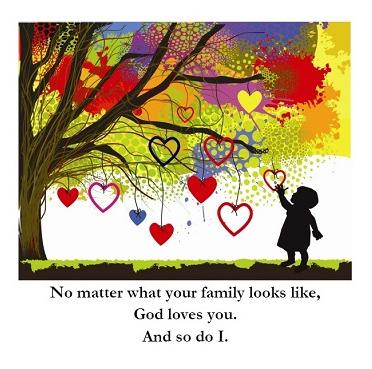
Books such as “Faithful Families” remind children that God loves them, no matter what their family looks like — even if they have two mommies or two daddies.
“Mr. Grumpy Christian” is for LGBTQ families to read if they hear Christians telling them that God cannot love them.
“Transgender Children of God” affirms transgender parents and children by declaring that God will love us no matter what we wear, who we love or how we identify.
“What to Wear to Church” was written with transgender children in mind, while the gender diversity of God’s creation is affirmed in “Is it a Boy, Girl or Both?”
The books are published by Wilgefortis Press as a project of Grace Lutheran Church in San Francisco. All nine books in the series so far are written byMegan Rohrer, pastor at Grace Lutheran and the first openly transgender pastor ordained in the Lutheran church.
Megan Rohrer
Megan Rohrer
Not every book in the series specifically addresses LGBTQ themes, but each one is promoted as “a safe book for reconciling churches and diverse families.”
Aimed at children from pre-school up to age 12, each book expresses God’s all-inclusive love with simple language and beautiful pictures by a variety of illustrators.
“My thought with these books is that as a collection they could help kids know that they are loved no matter what they wear, who they love and no matter what others tell them about it,” Rohrer told the Jesus in Love Blog.
The books grew naturally out of the ministry at Grace Lutheran. “A longtime welcoming congregation located in San Francisco, with a transgender pastor, we knew that our children’s books had the ability to be full of the grace that our congregation was named after,” Rohrer explained.
The first nine books were published quickly in February and March so they would be ready to use as prizes for the congregation’s Easter Egg Hunt.
“The children who received them over Easter were really excited and loved getting something they could take home with them from the service,” Rohrer said.
The books delighted adults in the church too. “Many wished they had books like this when they were younger,” Rohrer said.
“Faithful Families” was inspired by the many families and children at the church’s Grace Infant Child Care Center. Rohrer co-wrote it with Pamela Ryan, director of the center for more than 30 years. It is illustrated by Ihnatovich Maryia and aimed at children up to 8 years old.
Rohrer wrote “Mr. Grumpy Christian” after meeting a 7-year old-boy who tried to kill himself because a pastor threatened him with hell. It is suitable for LGBTQ families who face hostility from other Christians. Children ages 5 to 10 are the target audience. The rhyming book affirms:
When a grumpy Christian ruins your day,
Remember God’s love is here to stay.
In the true spirit of Christ, the book goes on to add, “But remember that God’s love extends to grumpy Christians too.”
“What to Wear to Church” reminds children that God will always love them no matter what clothes they wear. The illustrations were designed from a photo of Rohrer’s real-life grandmother, who inspired the story.
“‘What to Wear to Church’ is a short book for toddlers that I imagine my grandma reading to me if she knew I was going to grow up to be transgender,” Rohrer said. It is illustrated by Daren Drda.
“Is it a Boy, Girl or Both?” is one of the series’ most popular books with children. Pictures of animals illustrate the point that God’s creation includes many kinds of gender expression.  It is geared to children up to 8 years old. After exploring everything from koalas and penguins to banana slugs, the book concludes:
But, no matter your favorite color,
what your body looks like,
if you have a baby or not,
if you are in charge,
if you are a girl, boy, both or do not know,
or how any of these things change in the future,
God will love you no matter what.
And so will I.
Others in the series of Good News Children’s Books include “Church Bugs,” “Jesus’ Family,” “The Parable of the Succulent” and “The Children’s Crumbs.”
“We even have a book on the Holocaust that has some of my favorite illustrations of the series,” Rohrer said. “Never Again” was inspired by Rohrer’s wife Laurel, whose relatives who were killed in Auschwitz during the Holocaust. Illustrations are by Eugene Ivanov.
Wilgefortis Press works with a variety of artists to illustrate the Good News Children’s Books. “We gave the artists the story and creative license to illustrate,” Rohrer explained.
Rohrer received a master of divinity degree from Pacific School of Religion in Berkeley, CA and is currently a candidate for the doctorate of ministry degree there. Rohrer created Wilgefortis Press to publish books about queer, disability and poverty issues. Other books by Rohrer include “Queerly Lutheran” and “Letters for My Brothers: Transitional Wisdom in Retrospect.”
Rohrer was an art major at Augustana College in Sioux Falls, SD before switching to religion. That artistic training will be put to use when Rohrer serves as both writer and illustrator of the next book in the series. It addresses how hard it is to come to church for the first time by telling the story of a dog coming to church.
The Good News Children’s Books are published as both ebooks and paperbacks, and are available on Amazon.com (see links below for quick ordering). Discounts on paperbacks ordered directly from the church are available by contacting pastor@gracesf.com.

This post is part of the Artists series by Kittredge Cherry at the Jesus in Love Blog. The series profiles artists who use lesbian, gay, bisexual, transgender (LGBT) and queer spiritual and religious imagery. It also highlights great queer artists from history, with an emphasis on their spiritual lives.
Cherry-KittredgeKITTREDGE CHERRY is a lesbian Christian author who writes regularly about LGBT spirituality and the arts for the Jesus in Love Blog. She was ordained by Metropolitan Community Churches and served as its national ecumenical officer, advocating for LGBT rights at the National Council of Churches and World Council of Churches. She holds degrees in religion, journalism and art history. Her most recent book is The Passion of Christ: A Gay Vision.  (Read IMPACT’s review of her book here).


Wednesday, December 9, 2015

In the News: The Advocate

911 Call Suggests Meagan Taylor Was Arrested at Iowa Hotel for Being Trans

Meagan Taylor
Share on Twitter
Share on Facebook
New audio released by the American Civil Liberties Union appears to indicate that police were called to a Drury Inn & Suites in West Des Moines, Iowa, earlier this year because the manager was suspicious that pair of trans women of color might be "hookers." 
ADVERTISING
Attorneys representing Meagan Taylor, the black trans woman who was arrested and held for eight days in July based on that manager's false suspicion of prostitution, released a copy of the 911 call Tuesday, less than a month after filing a complaint with the Iowa Civil Rights Commission against the Drury Inn & Suites in November. 
In the less than two-minute exchange, the manager, who identifies herself as "Kim," describes the two women as "a little unusual," asking the emergency services operator to "run their name or information through the database," because "they're dressed as a woman, but it's a man's driver's license." 
When the operator offers to send a police officer to the location, Kim notes that "I'd want it to be discreet, though," before asking that officers arrive quietly and "park in the parking lot, instead of right out front." 
The operator pauses, then chuckles, explaining that she cannot run someone's information based on a phone call, because "it's against the law." Kim reiterates that "there's two males, but they're dressed as females," noting that the women have Illinois license driver's licenses — of which she took pictures. 
The operator then asks Kim if she is concerned "just because they're dressed as females," prompting the manager to explain that "they're dressed a little bit over-the-top, too; I just want to make sure they're not hookers, either." 
In the ACLU blog post accompanying the audio, attorney Chase Strangio cuts to the chase about the motivation for the manager's suspicion about Taylor:
"There was no emergency. Just two young women stopping for the evening at a hotel. … Meagan and her friend were not men dressed as women. They are women who triggered a set of racialized and gendered assumptions about who is appropriate and welcome in public space — still not transgender people of color in far too many places." 
Statewide LGBT organization One Iowa also issued a statement condemning Taylor's arrest and incarceration, laying bare the underlying prejudice that led to Taylor's ordeal. 
"It is my opinion that Meagan Taylor, an African American transgender woman, was targeted by the general manager of Drury Inn & Suites in West Des Moines because of ignorance, bias and stereotype," said Donna Red Wing, executive director of One Iowa. "Given the remarks made on the 911 call, perhaps the chain should institute a hiring process that weeds out anyone so racist and so transphobic that they would jump to the conclusion that a trans woman with brown skin must be a ‘hooker'."
Taylor's ordeal began July 13, when she and a friend were traveling from Kansas City, Mo., to Illinois for a funeral of that friend's brother. Taylor and her friend, a fellow black trans woman, stopped for the night at the West Des Moines Drury Inn on that date. In a November blog post for the ACLU, Taylor noted that she frequently stayed at the chain's numerous locations, and was a preferred member and "Gold Key" cardholder. She and her friend felt uneasy about the manager's reception when they checked in but proceeded to their room anyway. Shortly thereafter, police knocked on Taylor's door and searched the women and the room for evidence of prostitution. 
When police found no evidence the women were engaged in sex work, they arrested Taylor for possessing her transition-related medication, spironolactone hydrochloride, without a prescription. Although she wasn't carrying it at the time, Taylor did have a prescription for the medication, maintains trans pastor Meghan Rohrer, who was instrumental in raising funds to pay Taylor's legal expenses. 
During Taylor's eight-day stint in Polk County Jail, she says she was repeatedly strip-searched, patted down by a female guard on her "top half" and a male guard on her "bottom half," then housed in a segregated medical unit because jail staff were unsure whether to house her with men or women. 
"When this all happened, I knew exactly what it was," Taylor wrote in that November ACLU blog post. "The racial profiling, the transgender profiling, the harassment, the solitary confinement. I knew why it was happening, and I knew it wasn’t right. I knew something had to change. To experience so many levels of discrimination makes you feel like less of a person. I want to stand up for myself and other Black and transgender people. And so I did."
All charges against Taylor have been dismissed. 

Thursday, November 19, 2015

In the News: San Francisco Magazine

 an excerpt from San Francisco Magazine's December Women in Power Issue  - See more at: http://www.modernluxury.com/san-francisco/story/saluting-37-soldiers-of-social-change#sthash.rWFIoj0n.dpuf


One soundbyte from any presidential debate makes it clear: The country is divided as never before. From abortion to immigration to racial injustice, the clashes are fierce and the stakes are high. And if we are a society at war with itself, those pictured here are the battle-hardened commanders on the front lines. “There’s a historic consciousness in the Bay Area of the fights that have happened here,” says Celeste Faison, cofounder of the BlackOut Collective, an Oakland-based black activist group.

Within the past five years, the Bay Area has become ground zero not only for pervasive local issues like discrimination in tech and housing abuses but also for national causes like Black Lives Matter, transgender rights, and reproductive justice. Though these movements encompass all genders, an outsize number of those leading the charge are women. They organize grassroots and big-picture efforts, from advocating for groundbreaking legislation to teaching underprivileged kids to code.

Throughout the ranks, there’s the sense of a common goal. “Activists today are attracted to an intersectional framework,” says Samara Azam-Yu, co–executive director of the reproductive justice organization Access. “We’re not just about abortion or housing or immigration anymore. We’re interested in every issue and how they overlap.” The movements’ leaders include doctors, lawyers, doulas, engineers, pastors, and a self-professed “diva and screaming queen.” They’ve found strength in diversity, says Theresa Sparks, executive director of the San Francisco Human Rights Commission: “These people represent every element of our culture in San Francisco.” Whether taking to the streets or to social media, they’re shaping the future of our society.


One soundbyte from any presidential debate makes it clear: The country is divided as never before. From abortion to immigration to racial injustice, the clashes are fierce and the stakes are high. And if we are a society at war with itself, those pictured here are the battle-hardened commanders on the front lines. “There’s a historic consciousness in the Bay Area of the fights that have happened here,” says Celeste Faison, cofounder of the BlackOut Collective, an Oakland-based black activist group.
Within the past five years, the Bay Area has become ground zero not only for pervasive local issues like discrimination in tech and housing abuses but also for national causes like Black Lives Matter, transgender rights, and reproductive justice. Though these movements encompass all genders, an outsize number of those leading the charge are women. They organize grassroots and big-picture efforts, from advocating for groundbreaking legislation to teaching underprivileged kids to code.
Throughout the ranks, there’s the sense of a common goal. “Activists today are attracted to an intersectional framework,” says Samara Azam-Yu, co–executive director of the reproductive justice organization Access. “We’re not just about abortion or housing or immigration anymore. We’re interested in every issue and how they overlap.” The movements’ leaders include doctors, lawyers, doulas, engineers, pastors, and a self-professed “diva and screaming queen.” They’ve found strength in diversity, says Theresa Sparks, executive director of the San Francisco Human Rights Commission: “These people represent every element of our culture in San Francisco.” Whether taking to the streets or to social media, they’re shaping the future of our society.
- See more at: http://www.modernluxury.com/san-francisco/story/saluting-37-soldiers-of-social-change#sthash.rWFIoj0n.dpuf
THE CAUSE: TRANSGENDER RIGHTS  “Fifteen years ago, a trans person couldn’t walk around the city without being the object of ridicule, discrimination, or violence. That’s different now. This year alone, San Francisco is contributing over $1.5 million to transgender programs. We’re doing more than any other city in the country.” —Theresa Sparks

Theresa Sparks, executive director, San Francisco Human Rights Commission
Before leading the San Francisco Human Rights Commission, Theresa Sparks served as CEO of Good Vibrations and then as a commissioner on the San Francisco Police Commission. "One common thread over the last 20 years is that I have the privilege of serving the good people of San Francisco,” says Sparks. “These positions have allowed me to give back to this great city a small amount of all it has given me." 
Janetta Johnson, executive director at the Transgender, Gender-Variant, and Intersex Justice Project
The TGI Justice Project serves low-income transgender women of color who are in prison, formerly incarcerated, or targeted by the police. Recently, Johnson survived three years in federal prison, and has dedicated herself to limiting the recidivism rate in the transgender community by developing new interventions and strategies.
Clair Farley, associate director of economic development at the San Francisco LGBT Center
At San Francisco's LGBT Center, Clair Farley helped build the nation’s first ever LGBT-specific economic development department from the ground up. The center has a small-business program for those interested in entrepreneurship, as well as employment services to connect LGBT individuals to employers in the Bay Area. “We try to look at our work holistically, with an emphasis on social and economic justice,” says Farley.
Rev. Megan Rohrer, pastor at Grace Lutheran Church
The first openly transgender Lutheran pastor ordained in the United States, Reverend Rohrer currently serves as executive director of Welcome, a nonprofit that has worked with San Francisco homeless since 1996. Many of those Welcome serves identify as LGBT, and Rohrer says the organization is teaming up with Project Homeless Connect to study the needs of LGBTQ people who are homeless. Through Welcome and ministerial work, Rohrer says she works “to use the power I have to advance the rights and basic survival needs of my kin in the LGBT community who continue to struggle to find affordable housing, sobriety support, educational opportunities, and jobs.”

JoAnne Keatley, director of the Center of Excellence for Transgender Health at UCSF
“I look for what’s fresh and current in the field of trans healthcare,” says JoAnne Keatley, director of the UCSF Center of Excellence for Transgender Health (CoD). She has developed numerous healthcare and service programs for the transgender community in San Francisco, as well as several federally funded research and HIV-prevention projects. During Keatley's tenure, the CoD has begun to explore access to gender-affirming healthcare on a national level.
Nikki Calma, program supervisor for Trans Thrive
Trans Thrive is a drop-in center by and for the transgender community in San Francisco. The center, a program of the Asian & Pacific Wellness Center, offers everything from HIV prevention to counseling and health services. “We use a holistic approach,” says Calma, aka Tita Aida. “We want to address the issues that people here immediately need: housing, employment, healthcare, social support, and HIV testing.”
Felicia Flames, transgender pioneer and activist
Better known as Felicia Flames, activist and icon Felicia Elizondo has been fighting for transgender rights for well over 50 years. “I’m a Mexican spitfire, a screaming queen, and a diva,” says Flames, a 29-year surveyor of AIDS and a Vietnam veteran. Flames, 69, participated in the Compton’s Cafeteria Riots of 1966, a turning point in the LGBT movement and one of the first recorded riots over violence against the transgender community. “The people who started the cafeteria riots and Stonewall were transgender people of color,” says Flames. “We need to remember who sacrificed their lives. We went through a lot to get where we are now.” 
- See more at: http://www.modernluxury.com/san-francisco/story/saluting-37-soldiers-of-social-change#sthash.rWFIoj0n.dpuf

Tuesday, November 10, 2015

In the News: The Gaurdian

Transgender woman jailed for eight days sues Iowa hotel

Meagan Taylor jailed after hotel staff at the Drury Inn called police to report ‘men dressed like women’ were engaging in prostitution, ACLU complaint alleges

Drury Inn & Suitess hotel in Brentwood, Missouri. Photograph: Paul Sableman/flickr
in New York


A transgender woman was jailed for eight days after staff at the hotel where she was staying with a friend called the police to report two “men dressed like women” were engaging in prostitution, according to a complaint filed by the ACLU on Tuesday.

Last July, Meagan Taylor and her friend, both black transgender women, spent the night at the Drury Inn in West Des Moines, Iowa, on their way to Kansas City for a funeral. But Taylor ended up spending the next eight days in a county jail for possessing her hormone drugs without a copy of her prescription, according to the ACLU’s complaint.

After the women checked into their room, staff called police to report that they suspected the two hotel guests, described as “men dressed like women”, were engaging in prostitution, according to the lawsuit. The next morning, the women were woken up by loud bangs on the door.

The lawsuit alleges that the Drury Inn discriminated against Taylor based on her gender identity and race, a violation of state law which defines gender identity as “a gender-related identity of a person, regardless of the person’s assigned sex at birth”.

For Meagan, a stop at a hotel on the way to a funeral landed her in solitary confinement because she is black and transgender,” said Chase Strangio, attorney in the ACLU’s Lesbian, Gay, Bisexual, and Transgender Project, in a statement. “This type of profiling of transgender women of color is all too common and is part of the cycle that results in 41% of black transgender women having been incarcerated at some point in their lives.”

In the complaint, Taylor describes her ordeal as “humiliating, scary and traumatizing”.

She said that the hotel staff were suspicious of her and her friend from the moment they arrived, casting “disgusted” glances their way and whispering about them as if they weren’t there. At one point, the front desk clerk asked to make a copy of Taylor’s ID card even though the hotel had already processed her payment, she says in the complaint. The ID reflected Taylor’s birth name and gender because she said that she could not afford to legally change her name and update her documents.

West Des Moines police said that they were notified of “two males dressed as females who checked into the Drury Inn”, and that the hotel staff expressed concern about “possible prostitution activity”.

When the police searched their hotel room the following morning, the found no evidence of prostitution. However, Taylor was arrested and charged with possessing her hormone pills without a copy of the prescription, as well as two other charges.

She spent eight days in Polk County jail, several of them in solitary confinement, before activists raised enough money to post bond.

All charges were later dropped.

“As a black trans woman, I am used to unfair and discriminatory treatment, but this was extra upsetting because we were paying customers at a hotel and on our way to a funeral,” Taylor, 23, wrote in a post published on the ACLU’s website. “I felt like I had no rights.”

The jail Taylor was held at did not have a policy for transgender people, Taylor described in the post.

When they did the pat down, they had a woman pat down my top half, but a man pat down my bottom half, as if I’m not one person but two,” she wrote of her experience.

She said, however, that the jail had made attempts to accommodate her while she was there and had contacted an LGBT organization for assistance. They have since begun the process of creating a policy for housing transgender inmates in the prison.

But at the time there was no such protocol, and as such she was placed in a medical unit away from the other women in the general population. There she was given access to a telephone and video conferencing, but said she felt isolated and lonely.

Local residents staged a small protest in support of Taylor outside the Drury Inn following news of her arrest. Pastor Megan Rohrer, who heads Welcome, a San Francisco-based LGBT outreach program, raised over $5,500 to cover Taylor’s $2,000 bond and for fines related to an earlier charge. The additional funds will be used to help Taylor pay for her name change and an ID that matches her preferred gender identity.

“When I came out as transgender, I expected I would experience some discrimination, but I didn’t know how strong it would be,” Taylor wrote. “When something bad happens, I try to think about things and sort out why they happened. When this all happened, I knew exactly what it was: the racial profiling, the transgender profiling, the harassment, the solitary confinement. I knew why it was happening, and I knew it wasn’t right.”

The Drury Inn did not respond to a request for comment.