Showing posts with label lgbtq. Show all posts

Saturday, September 16, 2017

In the News: Bay Area Reporter

Online Extra: Political Notes: Poll finds many LGBT people eschew religion

NEWS


Christ the Good Shepherd Lutheran Church in San Jose recently marked its 30th anniversary as a Reconciled in Christ (welcoming and affirming to people of all sexual orientations and gender identities) congregation. Photo: Jo-Lynn Otto
ADVERTISMENT
New polling results have confirmed what faith leaders have long known, that many LGBT people eschew religion.

According to Public Religion Research Institute, a nonprofit, nonpartisan research organization, nearly half of LGBT Americans, at 46 percent, are religiously unaffiliated. The finding is roughly twice the number of Americans overall (24 percent) who are religiously unaffiliated.

The findings are from the firm's "America's Changing Religious Identity" report, which was released last week. It is the largest survey of American religious and denominational identity ever conducted, according to PRRI.

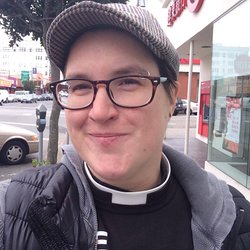
"I thought it was very accurate based on what I see among LGBTQ folks. I think it is harder in the Bay Area to come out as a Christian than as a queer person," said the Reverend Megan Rohrer, Ph.D., who is transgender and the pastor at Grace Lutheran Church in San Francisco.

Michael Chertok, a gay man who is president of San Francisco's LGBT Jewish synagogue Congregation Sha'ar Zahav, was also unsurprised by the findings. "In general, Americans are less religiously affiliated today. This is even more so in urban areas where many LGBT people live," Chertok, who was out of town attending a conference for LGBT Jews, wrote in an emailed reply. "And it is further exacerbated in the LGBT community, where some have not been accepted as who they are by their faith – and even worse, sometimes persecuted."

The report is based on findings from PRRI's American Values Atlas and interviews with more than 101,000 Americans from all 50 states. It found that only 43 percent of Americans identify as white and Christian, and only 30 percent as white and Protestant. In 1976, roughly eight in 10 (81 percent) Americans identified as white and identified with a Christian denomination, and a majority (55 percent) were white Protestants.

"For a long time a lot of this was anecdotal. Now, we can more clearly see this decline in religions and can see it with greater accuracy," said the Reverend Jim Mitulski, a gay man who is the interim senior minister at the Congregational Church of the United Church of Christ in Needham, Massachusetts.

Mitulski said the largely white congregation is emblematic of the churches in decline. "And we are liberal," he said. "In a sense, while I hate to see the decline, I am seeing it firsthand."

Thus, the PRRI poll "does confirm what I have been seeing," added Mitulski. It also should be a wake-up call for political leaders, he said.

"The political message is they need to stop making alliances with conservative religious leaders who are trying to use religion to control people," said Mitulski. "They need to stop seeing their alliances with religious leaders and religious organizations as something they can translate into votes."

As for the findings about LGBT Americans, the report found few identify as Christian. Only six percent of LGBT Americans are white evangelical Protestant, according to PRRI, while similar numbers identify as white mainline Protestant (8 percent) and white Catholic (6 percent).

Fewer than one in 10 identify as black Protestant (6 percent), Hispanic Catholic (5 percent), or Hispanic Protestant (3 percent), reported PRRI.

The report found stark generational differences among LGBT Americans in their religious identity. A majority (56 percent) of LGBT young adults (age 18 to 29) are religiously unaffiliated, compared to one-quarter (25 percent) of LGBT seniors (age 65 or older).

Notably, Buddhists and Unitarian-Universalists have a much higher proportion of LGBT members than other religious traditions, reported PRRI. One in seven Buddhists (14 percent) and Unitarian-Universalists (14 percent) identify as LGBT.

As for LGBT Jews, the survey found that LGBT Americans are somewhat overrepresented among non-Christian religions with 6 percent identifying as Jewish, compared to 2 percent of the general public.

"Particularly over the past year, we've seen a sharp upswing in the number of people attending our prayer services and programs – and some of the highest numbers of new members joining our community in our history, including many young people," wrote Chertok.

The Reform Jewish movement (URJ) has embraced LGBT Jews, noted Chertok, ordaining gay, lesbian, and transgender rabbis, permitting rabbis to marry same-sex couples for many years, and encouraging congregations to reach out to LGBT Jews. The Conservative Jewish movement has followed this trend, he added, noting that even some of the most fundamentalist Orthodox Jews "are starting to show openness" toward LGBT Jews.

"In general, the American Jewish community has been relatively accepting of LGBT people, compared to some other faiths," wrote Chertok. "Jewish synagogues in most major American cities, like Sha'ar Zahav in San Francisco, have had an outreach to the LGBT community for more than 40 years."

While certain Christian denominations continue to preach against LGBT people, there are those that are LGBT-affirming, pointed out Rohrer, and welcome LGBT individuals looking for a religious home.

"I think in the same way people would understand if you go to one Chinese restaurant that serves terrible food it is not emblematic of all Chinese restaurants. Research churches like where you want to go to the movies or eat food," said Rohrer. "It is work to figure out what is a safe or supportive space. We can't just assume every faith community is going to be terrible because we had abusive experiences with one faith." Despite the poll findings, Mitulski said he doesn't believe that Americans' "religious impulse" is on the decline. Prior to his moving to Boston last year, he worked in Denver and in Dallas "where church-going – even among LGBT people – is very strong," he noted.

And many LGBT people "are still gravitating," added Mitulski, to more liberal religions. "All of this is to say church leaders need to take notice that LGBT people are spiritual people but not interested in homophobic, oppressive religions," he said. "In the end I don't think anybody is."

The full report can be found online at https://www.prri.org/research/american-religious-landscape-christian-religiously-unaffiliated/.

Keep abreast of the latest LGBT political news by following the Political Notebook on Twitter @ http://twitter.com/politicalnotes.

Got a tip on LGBT politics? Call Matthew S. Bajko at (415) 829-8836 or e-mail mailto:m.bajko@ebar.com.

Saturday, June 24, 2017

In the News: NBC Bay Area


Controversy is brewing with the Trans March in San Francisco even before activists hit the streets Friday. Jean Elle reports.
(Published Friday, June 23, 2017)


In the News: Bay Area Reporter


Photo: Jane Philomen Cleland

The San Francisco Board of Supervisors honored LGBT residents for Pride Month at its meeting Tuesday, June 20. Each supervisor selected a person or group to recognize. From left are: District 11 Supervisor Ahsha Safai, art curator Melonie Green, San Francisco Cultural Affairs Director Tom DeCaigny, trans pastor Megan Rohrer, drag queen Juanita More!, community leader Rick Johnson, clerk of the board Angela Calvillo, art curator Melorra Green, activist Jesus Barragan, District 8 Supervisor Jeff Sheehy, and District 10 Supervisor Malia Cohen. Other honorees, not pictured, included API Equality Northern California, Josue Arguello, and the San Francisco Fire Department's ResQ group, which was represented by Keith Baraka and Nicol Juratovac.

Saturday, December 10, 2016

Best Sellers and 2016 Books Lists

Four of my children's books were named in Q Spirit's top 35 LGBTQ Christian Books of 2016.  And two were named best sellers.  See all the books here: http://qspirit.net/top-35-lgbtq-christian-books-2016/


BESTSELLER AT JESUS IN LOVE / Q SPIRIT
4. “Faithful Families”  by Megan Rohrer and Pamela Ryan
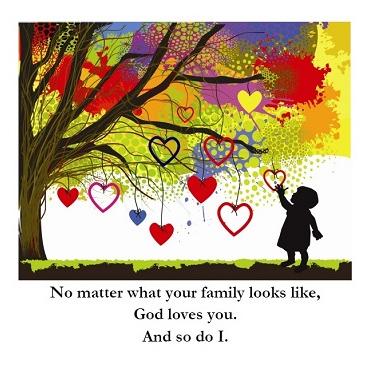
This children’s book reminds kids that God loves them, no matter what their family looks like — even if they have two mommies or two daddies. It was inspired by the many families and children at the child care center of San Francisco’s Grace Lutheran Church, where the author is pastor. Rohrer co-wrote it with Pamela Ryan, director of the center for more than 30 years. It is illustrated by Ihnatovich Maryia and aimed at children up to 8 years old. Rohrer is the first openly transgender pastor ordained in the Lutheran Church. Published by Wilgefortis Press. For more info and a sample page, see First-ever LGBT religious children’s books published.


BESTSELLER AT JESUS IN LOVE / Q SPIRIT
Mr. Grumpy Christian” by Megan Rohrer.
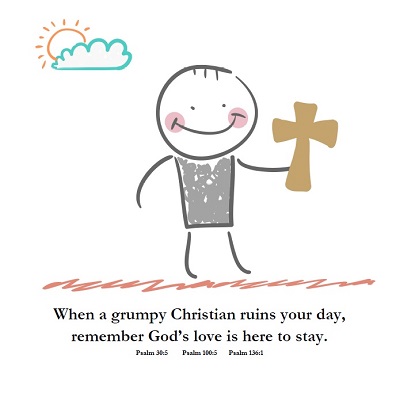
“Mr. Grumpy Christian” is a kids’ book for LGBTQ families, but adults love it too. The rhyming book affirms:
When a grumpy Christian ruins your day,
“Remember God’s love is here to stay.”
It was written for LGBTQ families to read if they hear Christians telling them that God cannot love them. In the true spirit of Christ, the book goes on to add, “But remember that God’s love extends to grumpy Christians too.” Rohrer wrote the book after meeting a 7-year old-boy who tried to kill himself because a pastor threatened him with hell. It is written for children ages 5 to 10. The author is pastor at Grace Lutheran Church in San Francisco and the first openly transgender pastor ordained in the Lutheran Church. Published by Wilgefortis Press. For more info and a sample page, see First-ever LGBT religious children’s books published.

Transgender Children of God” by Megan Rohrer.
Even a child can understand transgender identity with this heartwarming book aimed at kids ages 2 to 8. “Transgender children of God play with both dolls and trucks. No matter what you play with, God will love you,” it begins. The books goes on to proclaim God’s love regardless of what you wear, how you look or how you mix male and female. It also affirms transgender parents, although it can be read by any progressive family of faith. The author is pastor at Grace Lutheran Church in San Francisco and the first openly transgender pastor ordained in the Lutheran Church. Published by Wilgefortis/Lulu Press. Available in both paperback and e-book versions. For more info and a sample page, see First-ever LGBT religious children’s books published.

Is It a Boy, a Girl, or Both?” by Megan Rohrer.
Animals have amazing gender diversity created by God and revealed in this new children’s book. It opens with the line, “How do I know who is a boy and who is a girl? God created diverse people and animals.” The rest is a fun safari through the different gender expressions in creation, including pictures of birds, bunnies, koalas, penguins, sea horses, hyenas, chimps, deer, banana slugs, fish and of course people. It ends with an affirmation: “God will love you no matter what. And so will I.” Geared for kids age 8 and up, it is one of the most popular books in the Good News Childrens’ Books series. The author is pastor at Grace Lutheran Church in San Francisco and the first openly transgender pastor ordained in the Lutheran Church. Published by Wilgefortis Press. For more info and a sample page, see First-ever LGBT religious children’s books publishedMore info

Thursday, December 1, 2016

In the News: Bay Area Reporter


Trump election raises housing, homelessness concerns
Published 12/01/2016 

Federal funds for homelessness and housing programs could dry up under a Trump administration, leaving city officials scrambling to determine how the services can be maintained if President-elect Donald Trump follows through on promises he's made to deport undocumented immigrants and penalize sanctuary cities like San Francisco.

The city could lose as much as $1 billion per year in federal funding, leaving advocates concerned about where that shortfall would be made up and about how housing services would be provided to the homeless, seniors, immigrants, and others.

Mayor Ed Lee and the Board of Supervisors have reaffirmed San Francisco's sanctuary city status, and Lee said at a unity rally after the election that San Francisco would remain a welcoming place for all, including LGBT people, people of color, and all religious faiths.

Earlier this month, Brian Cheu, director of community development for the Mayor's Office of Housing and Community Development, held a forum to assess the housing needs of the homeless, senior, and LGBTQ communities. Also mentioned was how programs could continue being funded should the city lose its federal funding during a Trump administration.

"Currently our department was asked to provide a summary of our current federal dollars and what it supports so that the mayor could better understand how a cut to our federal funding would affect our department," Cheu said at the November 17 meeting. "The mayor will look at available funding sources to see how the general fund and other sources would be used to maximize the availability of existing services and avoid losing valuable community resources."

Cheu also said that it was too early in the budgeting process for the city to finalize strategies should certain significant funding streams be eliminated.

Around 100 people attended the forum at the Castro Senior Center inside Most Holy Redeemer Catholic Church at 110 Diamond Street. The meeting was divided into three groups. Elena Chavez Quezada, senior program officer for the Walter and Elise Hass Fund, led the homeless discussion. Clinton Loftman, who also works with the Mayor's Office of Housing and Community Development, facilitated the senior housing discussion. The HIV and housing discussion was led by Pastor Megan Rohrer of Grace Lutheran Church.

Andrea Aiello, executive director of the Castro/Upper Market Community Benefit District and Tommi Avicolli Mecca of the Housing Rights Committee both participated in the homeless discussion. Aiello addressed the Castro Cares programs, which puts community monitors out onto the streets of the neighborhood to help lead them to the services they need.

"Homeless outreach is about getting to know people," she said. "How can that happen when monitors are out there for two hours every six months? While we've touched a lot of people there's a gap. Something is missing. We're not quite providing what the people need."

Avicolli Mecca said people need to fight evictions and see that more housing is built.

"We need to decriminalize homelessness – we need to involve homeless folks in the discussion. Why is there no shelter in the Castro? Our community has a homelessness crisis," he said.

One homeless man who declined to give his name spoke up during the discussion. "We need to lean on the tech companies," he said. "Make them come through with funding. It's disgusting that we have so much wealth – there should be no one on the streets."

He also mentioned mental health concerns, noting that in his experience psychiatrists were shying away from homeless services because they could charge higher fees to tech workers.

At the HIV table, people were expressing concern about the possibility of funding cuts. Several people mentioned that the housing policies that have been developed in Salt Lake City were a good model for San Francisco to follow. Salt Lake City – and the state of Utah – has decreased homelessness by 91 percent by increasing the services it offers and by sending more outreach workers into homeless communities.

Rohrer spoke to the Bay Area Reporter after the meeting.

"Before the meeting, I thought the most emergent issue would be a response to the projected loss of $2 million dollars in HIV/AIDS housing funds due to federal recalculations," Rohrer said. "After listening to the needs of advocates, service providers, and legal advisers supporting individuals with HIV/AIDS in San Francisco, I now understand that the potential loss of federal funding is across a wide range of important intersectional issues affecting vulnerable San Franciscans."

Rohrer, who uses gender-neutral pronouns, said that they were pleased to learn about a new computer portal that will soon streamline the application process for low-income housing. The portal will also email individuals when housing that matches their criteria becomes available.

At all three discussions, the scarcity of available housing was an ongoing issue. Some noted that the cost of building affordable housing has limited the city's ability to match the needs of its low-income residents, while others argued that the city could build the housing regardless. A number of people expressed support for the city's new Department of Homelessness and Supportive Housing, which aims to streamline all services under one roof.

"While it's always good to have discussions on this topic, the simple fact is that the city has to provide housing to the homeless," Avicolli Mecca said. "Why is the city continuing to build luxury housing for the rich? We especially need housing for the homeless in the Castro. The LGBT community has high rates of homelessness and poverty – yet in the past six years no housing for the homeless has been built in the Castro area."

Aiello pointed out that a lot of the suggestions made at the meeting had been heard before.
"The city knows what needs to be done," she said. "It just needs the political will to do it. Optimism was expressed about the city's move to bring all services under the new Department of Homelessness and Supportive Housing. I share that optimism, but strong leadership and the political will will be needed."
Cheu said that he was pleased with the meeting. He called the evening "an honest, civic dialogue about important issues such as civic housing, housing for HIV-positive folks, and the homeless."

"As we were holding the meeting in the Castro, these three issues are of key importance both to the city at large and specifically to the Castro community," Cheu added. "There was a good mix of stakeholders represented, and that being said, there is always the need to have even more constituents present who are affected daily by these issues."

Tuesday, September 6, 2016

In the News: Beyond Chron

Celebrating Compton’s 50th: Vanguard Revisited, W/ Rev. Megan Rohrer

by on September 6, 2016

Reverend Megan Rohrer
If you missed the prior events celebrating the 50th anniversary of the August 1966 Compton’s Cafeteria riots in San Francisco’s Tenderloin, don’t despair. On Thursday, September 8, the Tenderloin Museum hosts Reverend Megan Rohrer, who will honor the historic legacy of Vanguard, San Francisco’s first gay liberation group.

In 2011, Rohrer and historian Joey Plaster created a remarkable work of public history: Vanguard Revisited, which introduced the history of the 1960s radical queer-youth organization Vanguard to contemporary queer homeless youth, who created their own art and poetry zine in conversation with essays and themes from the original Vanguard newsletter. The new zine also featured archival materials, a historical narrative and writings from urban ministers and youth organizers.

The storytelling project Temporal Cities will attend the event to share and record LGBTQ stories. Listen to a piece of oral history in their rotary phone, or type your own memories on a real typewriter.
Temporal Cities is a public art project that examines the experience of living in the Tenderloin through the stories of its residents. For more information about the project, visit TemporalCities.org.

For the 50th Anniversary Compton’s Commemoration, a second issue of the Vanguard Revisited zine will be released with new materials by the original authors and editors. For the Tenderloin Museum program, Rohrer will describe the initial process leading up to Vanguard Revisited and will discuss its legacy. Rohrer is the pastor of Grace Evangelical Lutheran Church in San Francisco and is a nationally recognized leader on issues of homelessness, gender, sexuality and faith.

The Compton’s riot is only a part of the Tenderloin’s GLBT legacy. The Tenderloin was the geographic center of the city’s emerging GLBT movement from the 1940’s through the 1960’s, a story on display at the Tenderloin Museum.

ABOUT TEMPORAL CITIES
Temporal Cities will be stationed inside the Museum during the event, collecting stories related to the LGBTQ experience in the Tenderloin. Temporal Cities is a public art project that examines the experience of living in San Francisco’s Tenderloin neighborhood, through the stories of its residents. The piece combines analog slide projection and interactive storytelling; a projected image mounted on the street attracts passersby to the installation, where they are encouraged to share a personal story that took place nearby. In collecting and archiving these stories, artists Lizzy Brooks and Radka Pulliam are building a nuanced map that explores the changing nature of the city and our collective ideas of permanence.
Here is the ticket information.
Randy Shaw details the Tenderloin’s GBLT history in The Tenderloin: Sex, Crime and Resistance in the Heart of San Francisco

Thursday, June 30, 2016

In the News: Hoodline

You Have Your Own Dancing To Do': A Farewell To The Castro's Orlando Memorial

A group of about 100 people gathered at last night for a solemn, heartfelt and often emotional final farewell to the 49 LGBT people who were murdered on June 12th at Pulse, a gay nightclub in Orlando, Florida. 
Led by Sister Merry Peter of the Sisters of Perpetual Indulgence and Pastor Megan Rohrer of Grace Lutheran Church, the evening culminated in the reverential removal of the dozens of flowers, photographs, votive candles, rainbow flags and other mementos that had been placed in front of the Bank of America building at 18th & Castro streets.
The memorial's removal comes after candles left at the site caused a small fire on Monday morning. While the fire was put out quickly and caused no structural damage, the Castro CBD decided the memorial needed to be taken down for safety reasons—but not before a final farewell from the community.
Sister of Perpetual Indulgence's Merry Peter beginning the blessing ceremony.
photo: steven bracco/hoodline
The service opened with an invocation from Sister Merry. "Let's have a moment of silence for Orlando, for Istanbul, for Syria and for the Bayview," the Sister said. "We are coming together as a community who built this memorial that is a focus for our grieving. It's time to open the space to joy."
"We want to make sure that before we take [the memorial] down, we get it out," Pastor Rohrer, the first openly transgender leader to be installed in a Lutheran congregation, told the assembly. "We must live our lives for remembrance—that all who wonder if their lives matter are ensured that their lives are sacred."
Rohrer held up 49 small signs, one for each of the 49 people killed in Orlando. The crowd applauded as each sign was held up one by one, and randomly handed to various attendees.
"Queer lives matter," stated one sign.
"We're here, we're queer, get used to it," said another.
"Gun control is a gay issue," stated a third.
Pastor Rohrer then invited mourners to step up and speak if they were moved to do so.
Jerry Skittles said that three of his cousins, all of whom were planning on attending SF Pride this year, had died at Pulse. "They couldn't come, and now they're up there, watching over us with Pride," he said.
"Don't judge me because the Lord made me just like he made you," said Thelma Flores.
"Be kinder to each other," said Jaime Miranda. "Have each other's back."
Volunteers and blessing attendees help clean up the memorial.
photo: steven bracco/hoodline
Openly gay District 8 Supervisor Scott Wiener, whose district includes the Castro, did not address the crowd. He stood quietly in the background, his eyes welling up with tears.
"This memorial was completely organic from the community," Wiener told Hoodline after the ceremony. "It's only fitting that we bless it and that we preserve it for posterity, so that we always remember Orlando."
The hour-long service concluded with a final invocation from Sister Merry, who asked the mourners to join her in a brief shout, for the purpose of letting go of anger and grief.
"I release you," the Sister said. "You have your own dancing to do."
The mourners were invited to take any mementos from the memorial which moved them. The rest were collected by the GLBT Historical Society.

Thursday, June 23, 2016

In the News: San Francisco Bay Times

Thousands Rally for Orlando Massacre Vigil in the Castro

NEW BT 6.23 all_Page_13_Image_0008 NEW BT 6.23 all_Page_13_Image_0005

By Dennis McMillan

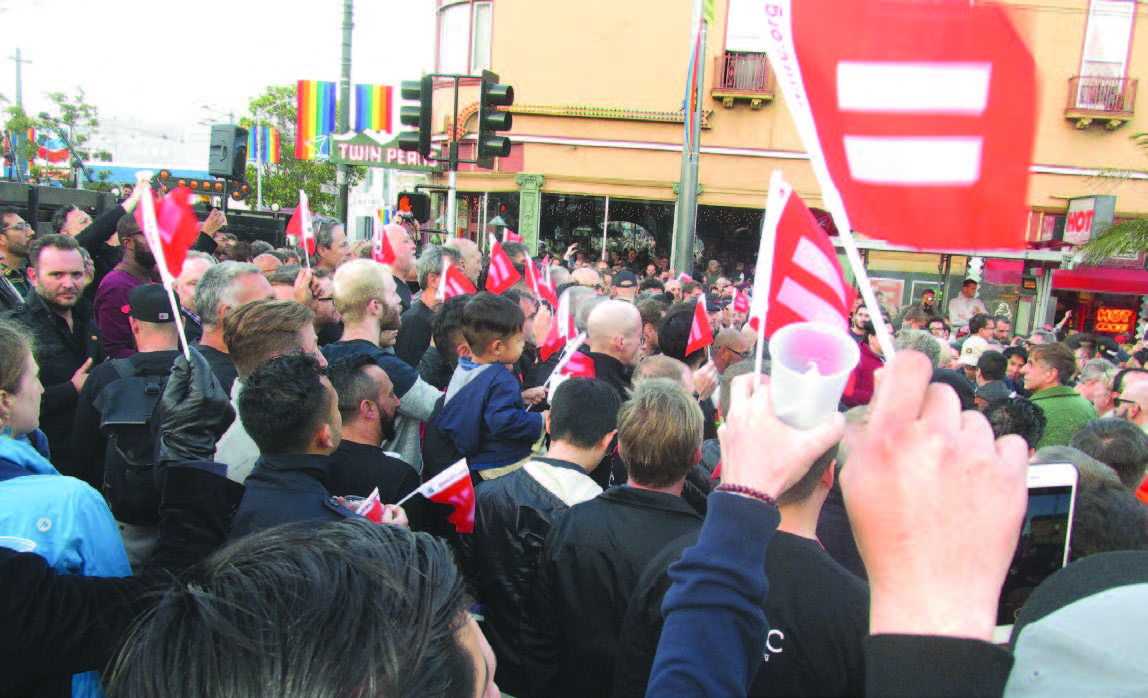
Thousands gathered in the streets and on sidewalks near the Harvey Milk Plaza in the Castro in front of a stage on a flatbed truck to respond to the worst mass shooting ever in America’s history, and the worst loss of lives on our soil since 9-11. A total of 49 died and 53 patrons were wounded in the Orlando, Florida gay nightclub, Pulse, during Latin Night.

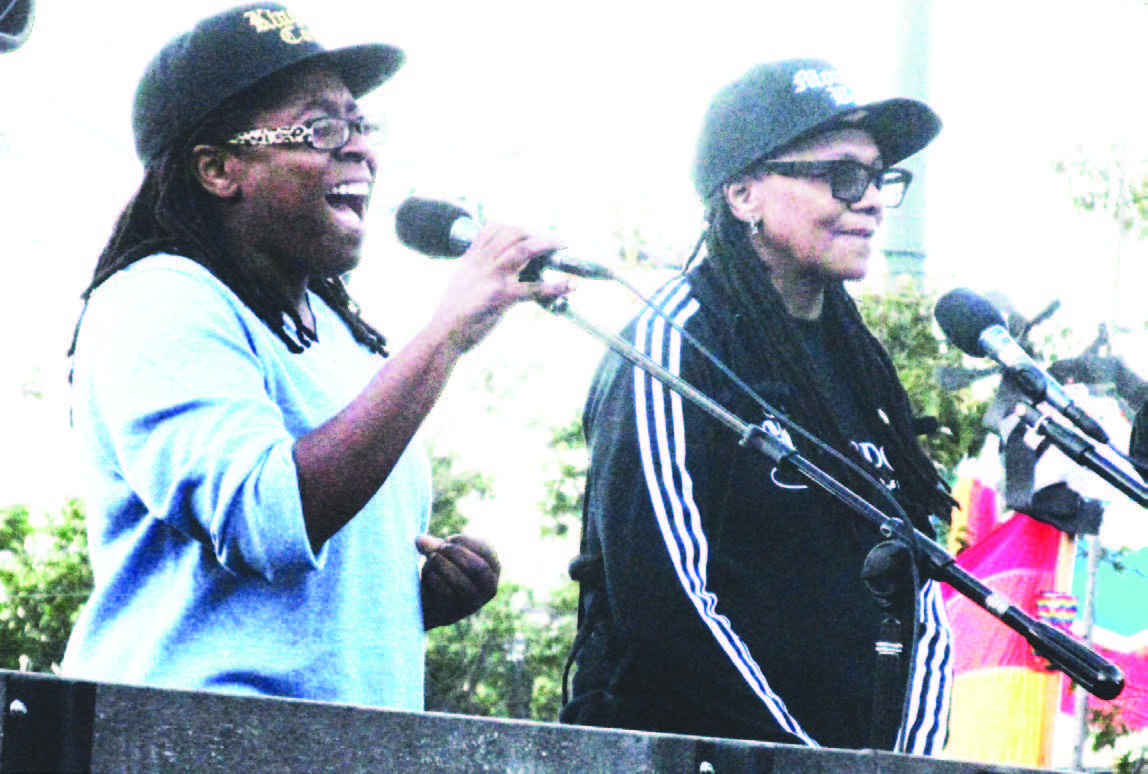
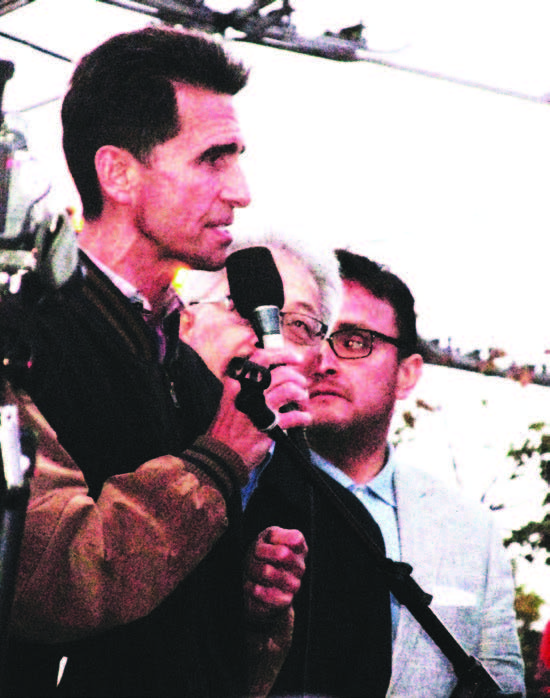
Two Drag Kings known as Momma’s Boyz opened the Castro vigil singing a mournful “Freedom” song to a tearful crowd. But the energy changed to anger and resolve when speakers took the podium. Supervisor Scott Wiener said, “We’re here today to recommit ourselves to the fight, to honor the survivors, to send good energy to the families and friends who have been left behind.”

Supervisor David Campos said, “As a gay Latino man, it is not shocking to me that the worst mass shooting in the history of this country would target the queer community.” He added, “We want our leaders to think of queer people of color not just when there’s a massacre, but every single day.” As many of the speakers stated, he emphasized opposition to Islamophobia and xenophobia. “We are all in this together. I know that targeting the Muslim community is simply wrong, and we’re going to speak out against it.”

Approximately two-thirds of the Orlando victims were Latino. Lito Sandoval, SF Latino Democratic Club president, noted, “Latino leaders were not contacted [for the vigil]. We had to reach out.” He stressed, “Acts like this don’t make me want to back down. They make me want to continue to fight.”
NEW BT 6.23 all_Page_13_Image_0006
Among the many Muslims speaking at the rally was a Muslim doctor from San Francisco General Hospital, Suzanne Barakat, M.D. saying, “As a physician, I see these tragedies as symptoms of a deeper illness, a disease of the soul that goes by different names.”

Former Assemblyman and former Supervisor Tom Ammiano joked that NRA was an acronym for “National Real A-holes.” He made several fun-loving ribald jokes, but ended seriously, saying, “We are still here. We are still strong. We are still fighting, and we’re not going to live in fear!”
“We’ve known gun violence before,” shouted Pastor Megan Rohrer. “Angry people of faith are not the majority. We are queer. We are transgender. We are fabulous, we are faithful. We must stand up. We must vote until everyone is safe in bathrooms, in churches, and in the … streets.”

“There’s a lot of heartache, but we are coming together to create some type of solidarity, not only in San Francisco but also beyond ourselves,” said Dyke March organizer Rosa M. Hernandez.

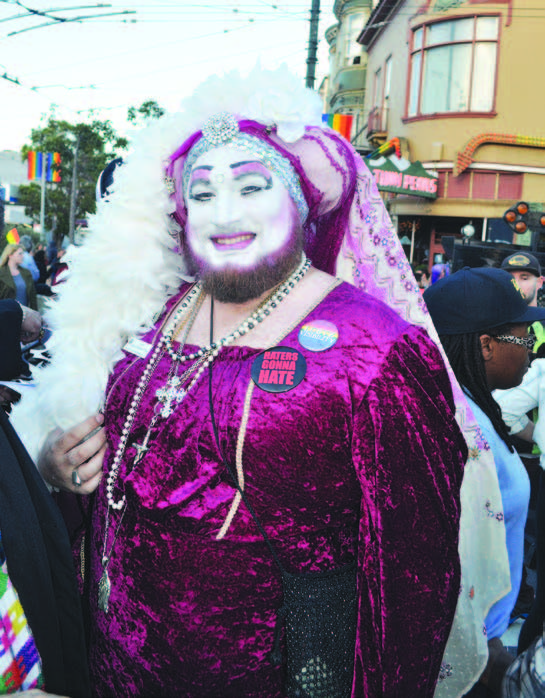
Sister Merry Peter and Sister Roma of The Sisters of Perpetual Indulgence led the crowd in a recitation call and response, asking everyone to lift up their candles and repeat each time, “We shine our light on you!”
NEW BT 6.23 all_Page_13_Image_0007
Mayor Ed Lee spoke through a few boos from the audience, “We’re here in unity so we can stop this violence, and San Francisco must lead the way. Hatred will not drive out hatred, and darkness will not drive out the dark.” He concluded, “This is a stark reminder that violence still threatens our LGBT community.”

Toney Chaplin, Interim Police Chief who was recently appointed after Chief Greg Suhr resigned, said, “The NRA is a powerful group, but I am staring at a more powerful group.” He added, “We need to get this legislation in place to change the gun laws in this country.” He noted that San Francisco Police have increased patrols in the Castro and elsewhere. And they promise to really step up security at the San Francisco Pride Parade and Celebration.

Members of the San Francisco Gay Men’s Chorus closed the vigil by singing “We Are a Gentle, Angry People,” with SFGMC Director Dr. Timothy Seelig leading the crowd in the familiar Holly Near protest song. Then they sang “We Shall Overcome” and closed with an old Irish blessing ending with “May God hold you in the palm of His hand.”

Following the rally in the Castro, people marched peacefully but defiantly to City Hall, which was appropriately lit in the rainbow colors. The names of murdered victims were read aloud. After the rally, many left their candles burning on a statue of Abraham Lincoln at City Hall. So appropriate, as Lincoln was murdered for civil rights.

To support the victims and their families, please go to gofundme.com/pulsevictimsfund

Wednesday, June 15, 2016

In the News: Apple Daily


「沒人能奪我們閃耀的愛」 2千人街頭悼佛州死者

德克(左)和伴侶德瑞克(右)雖然心情沈重,但勇敢的親吻,因為「沒有人可以偷走我們閃耀的愛」。王欣儀攝
【王 欣儀╱舊金山報導】美國佛州同志夜店週末的喋血慘案,導致至少49人喪命槍管。兩週後即將舉辦同志大遊行的舊金山,昨夜在卡斯楚(Castro)同志區舉 辦哀悼晚會,現場許多人不禁為罹難者及LGBT社群難過落淚,誓言「以愛對抗仇恨」,繼續為自己的身份認同爭取權益。

搬 離卡斯楚區已25年的葛維達(Govinda)在哈維•米爾克廣場(Harvey Milk Plaza)的一角頻頻用衣服拭淚。44歲的他表示,奧蘭多事件讓他再次踏進同志區,滿街飄揚的彩虹旗,讓他想起那段同志被污名化的過去,所以心情十分激 動。「我想到年輕時的自己,還有昨晚那些被奪走生命的年輕人。他們不會白白地死去。願所有人以愛回應,而非怨恨。」

大方親吻彼此的德克(Dirk)和伴侶德瑞克(Derek)不認為從此以後必須小心翼翼地過日子,因為那不是解決之道。德瑞克說,「我們出來參加 各個活動,讓這個社群更加緊密」;德克也堅定地表示,「沒有人可以偷走我們閃耀的愛」。語畢,兩人相視而笑,甜蜜地親吻對方的唇。

代表卡斯楚、第8區市議員高威善(Scott Wiener),發言時痛批「恐同情節」和美國失能的槍枝管理機制。「35年前,我還是個尚未出櫃的青少年時,LGBT的族群被鎖定殺害;35年後,這種 事還是血淋淋的不斷重演。」他激動的指出,「這個國家被槍枝淹沒,而這些武器唯一的用途,就是屠殺生命。」

他和第9區市議員坎伯斯(David Campos)雖在許多議題上意見相左,但兩人昨晚一同在晚會上,誓言繼續為同志社群努力。

身為路德教派第一名變性牧師的羅勒(Megan Rohrer)希望民眾不要被高漲的情緒影響判斷。「很多聲音會企圖說服我們責怪他人,我們也可能因為恐懼和憤怒,把我們的心也關起來了,」但是他要大家 記住「我們都是有信仰的人」,而以神之名散播仇恨的人只是少數。他高聲呼籲:「我們要從教堂、廟宇、清真寺裡走出來!」

逾2千名參加晚會的民眾,會後高喊著同志運動時米爾克的名言「別躲在酒吧,上街頭!」繼續遊行至市政廳,表達他們也是這個社會的一份子的信念。市政廳昨晚也在建築外投射六彩燈光,悼念奧蘭多的受難者。

舊金山每年的同志大遊行都吸引百萬人共襄盛舉,屆時維安將成大問題,週日在洛杉磯舉辦的遊行便已遭鎖定。據舊金山的主辦單位表示,他們目前正與警方協調加強各安全措施。

Tuesday, June 14, 2016

In the News: Mondoweiss

As San Francisco mourns Orlando, Trump pulls Clinton his way
US Politics Wilson Dizard on June 14, 2016

As San Francisco mourns Orlando, Trump pulls Clinton his way

US Politics
on
- See more at: http://mondoweiss.net/2016/06/francisco-orlando-clinton/#sthash.zwrO6zNQ.dpuf

 “Love” was the word I heard most often Sunday in San Francisco from people mourning the deadliest mass shooting in American history, which took the lives of at least 49 at a gay nightclub, Pulse, in Orlando early Sunday morning. In a phone call to 911, the shooter, now dead, declared allegiance to the Islamic State, police say.

“God is love,” said one man, Daniel Borysewicz, a hospice pastor.

“Muslims are about love and the sanctity of life just like Christians, just like Buddhists, all different types of people who look on the side of love. Because God is love, no matter how you wrap him up, or her or wrap them up. It’s a matter of…God is love..and the love that we share with human beings is the connection we have with God because that’s how God manifests in our lives. It is the love we share with each other.”

Another man, a Latino gay rights activist, said love was the foundation of the unity marginalized groups need to show in the face of hatred.

“Love is love,” said Salvador Tovar. “We’re going to stand united. Muslims, Christians, Catholics, Atheists, everyone here. We’re standing together for our brothers and sisters whose lives were taken. Regardless of your religion, regardless of your sexual identity, regardless if you are straight, gay, bisexual, love is love.”

I asked: “What would you say to Hillary Clinton or Donald Trump or Bernie Sanders right now?”

“Love is love,” he said. “We’re going to stand equal. Or they will take us one by one.”

Both men, members of the city’s LGBT community, rallied and marched with thousands of others down Market Street on Sunday night, a show of defiance and unity against anti-gay bigotry and gun violence itself. In the speeches by local politicians, activists and parents of gun violence victims, Islamophobia, homophobia and the National Rifle Association were San Francisco’s common enemy, not Islam or Muslims. Thousands cheered when David Campos, a gay city council member, said the community would not respond with bigotry towards Muslims.

The gruesome, hours long attack in Orlando, which police say was carried out by Omar Mateen, 29, an American of Afghan descent, was the work of a man who had a history of abusive behavior against his former wife and others. His father maintains that his son, who died in the attack, hated gay people and became enraged seeing two men kissing in front of his family. A security guard, his former coworkers call him unhinged, racist and sexist, NBC reports. He made disturbing statements to colleagues about Islam, but you’d probably think Mateen was a jerk no matter what religion he claimed to follow.

Eric Hubert, 94, a member of Grace Episcopal Church, said he didn’t blame Islam for this kind of killing.

“This is an American craziness,” he observed, adding that “Abraham is father to us all.”

With a history of angry outbursts, Mateen was the kind of guy who San Franciscans say should not have been able to legally purchase the semi-automatic assault weapon he used to slay dozens of people. There are already legal remedies that might stop this kind of massacre. California has started experimenting with a “Gun Violence Restraining Order,” or GVRO, that allows families or law enforcement to request courts issue GVROs on individuals who are threaten to harm themselves or others. Law enforcement then can take the weapons away.

But no such law exists in Florida, and there are minimal restrictions to gun ownership. So here I am writing about 49 people who were alive on Saturday, and had no idea they wouldn’t live to see the sun rise on Sunday.

By Monday, Donald Trump and Hillary Clinton, the Stonewall Jackson and George McClellan of American politics (both losers, in their own special ways) were duking it out in one of the first major battles of what promises to be an election season full of them. Although Clinton paid lip service to rejecting Islamophobia, her proposal for what to do about people like Mateen were similar to Trump’s.

In an interview with NPR‘s Steve Inskeep, Clinton laid out a “number of proposals to tackle this issue of self-radicalization.” They include “working with Silicon Valley to prevent online radicalization” and “creating more integrated intelligence use among all levels of law enforcement,” pulling from foreign and domestic sources, and, in her Trumpiest statement yet, the creation of a “broader database” of suspicious individuals.

Federal authorities reportedly interviewed Mateen several times about his flirtations with political violence, but never found evidence enough to charge him with anything.

Clinton’s targets for increased surveillance, and restrictions on owning a gun, would include “people who have expressed the kind of admiration and allegiance to terrorism.” Muslim communities across the United States have experienced what it’s like to be spied on, and Clinton’s proposals suggest nothing more than more surveillance. In New York City’s surveillance scheme for Muslims and mosques, a young man’s deciding not to drink was reason enough for suspicion. To Arab American leaders in the city, that kind of distrust did nothing but breed distrust with law enforcement.

Many might argue that he shouldn’t have been able to buy a gun because he was a despicable abuser of his wife. Instead of saying that, something based on known facts, Clinton is talking fluent Beltway-speak for: “We need to expand the surveillance state. There will be more money for that when I’m president.”

Trump, meanwhile, has said that we need to get “tough and smart” and that he would have a lot of “systems” to keep track of Muslims, and a total ban on Muslim coming into the United States. They’re a nightmarish cartoon drawn in childish crayon colors, but that’s just a less politically savvy way of saying what Clinton did. Expand the powers of the government and all will be well. In San Francisco, however, the emphasis was on love, not suspicion.

Mikail Ali, a Deputy Chief for Special Operations, addressed reporters about security for the next pride event. The local news reporters watched eagerly for signs that Ali might give their viewers something to worry about. Police circled Harvey Milk Plaza, named after San Francisco’s first openly gay city council member.

As the local news crews packed up and moved on, I asked Ali if they been threats against Muslims over the attack.

“We have not. We’re here and we’re also present at a mosque here in the city to make sure nothing adverse happens,” he said. “We’re passing by each one.”

I asked Ali if he was a Muslim himself.

“By coincidence, yes,” he said.

“How you and other Muslim officers dealing with this talk of surveilling Muslim communities?” I asked.

“We’re not even having that discussion right now,” he said. “We’re discussing having a discussion about supporting a community that is mourning and addressing whatever might develop as a result of this investigation.”

Meanwhile, on Twitter, Trump, who poses in pictures with cops regularly, was selling followers and potential voters on his prescient hot takes on Islam.

“Appreciate the congrats for being right on radical Islamic terrorism,” he tweeted Sunday. “I don’t want congrats, I want toughness & vigilance. We must be smart!”

He also called on Obama to resign for not using the term “radical Islam.”

“Is President Obama going to finally mention the words radical Islamic terrorism? If he doesn’t he should immediately resign in disgrace!”

So that’s the Donald for you. But Clinton, in the same interview where she promised to work with Silicon Valley (translation “generous information technology contracts for lucky techies”), also lost her first verbal battle to Trump, in an election where words really matter.

Trump wants to break down the barrier he sees in political correctness run amok. Like the Environmental Protection Agency keeping lead out of your children’s blood, political correctness when practiced by politicians helps keep racial slurs out of your children’s ears. It’s a thin membrane, and it’s fraying.

Her words show that Trump himself might be able to drag her to the right.

Clinton lost when she said responded to Trump’s criticism of Obama for not saying “radical Islamic terrorism.” And she lost badly, as Trump would say.

Clinton also lost an important rhetorical battle with Trump on Sunday morning. Using the term “radical Islam” or any combination of the words

“It matters what we do, not what we say,” Clinton proclaimed.

Tell that to anyone who has ever had “raghead” shouted at them from a passing car, and they’ll tell you the words we say matter, too. They’re deeds in their own right.

“Whether you call it radical jihadism or radical Islamism, I think they mean the same thing. I’m happy to say either. But that’s not the point. The point is Trump goes way too far,” she said.

Now that Sanders is out, Clinton is free to pivot away from the party’s left and start using terms like “radical Islamism.” Trump is pushing Clinton to inch to the right, prompting her call to expand surveillance of Americans. Why not use the term “radical Islamism” or “jihadism.” But this is the language of Fox News. It’s his language. Trump has Clinton talking like Trump does, and Clinton doesn’t think that matters that much.

“I have been hitting Obama and Crooked Hillary hard on not using the term Radical Islamic Terror. Hillary just broke-said she would now use!” he tweeted Monday morning.

If Clinton and Trump are going to reap the whirlwind this year in a dramatic political war for the soul of America, while Bernie Sanders stands nearby watching, then Clinton just lost the first battle. She lost because she suggested expanding the surveillance state, just as Trump does. She also failed to grasp the importance of not sticking the words “radical” and “Islam” and “jihadist” all around a sentence. It’s that kind of thing, repeated billions of times, that fertilizes the soil of society to grow the noxious weed that is Islamophobia.

In order to really mend the Democratic party, Clinton needs to stop just talking about Muslims, but rather take a line from Sanders and start speaking to Muslims themselves. That happened naturally with Sanders, with surrogates like Linda Sarsour acting as advocates for his campaign. Clinton might have a harder time gaining their trust, after treating them as a political liability in 2000, handing back cash to Muslims after getting cold feet about whether they supported Hamas or not, Electronic Intifada reports.

The rally in the Castro district on Sunday had a prominent Muslim voice. Suzanne Barakat, a Muslim doctor living in San Francisco, spoke at the Castro street rally. In 2015, she lost her brother, Deah, then 23, and two other relatives, Yusor Abu-Salha, Razan Abu-Salha to an angry white man with a gun in North Carolina. She and other members of the Muslim community consider it an attack motivated by hatred of Muslims.

“I am a physician at San Francisco General Hospital, a Syrian American and a Muslim,” Barakat began. “I work with colleagues, family members and serve with love patients who identify as members of the LGBT community. I know from first hand the pain and alienation that many of them experience. These tragedies are coming to us far too frequently. As a physician, I see them as symptom of a deeper illness: hatred, cruelty, intolerance. The cure for it is the medicine of love, kindness and compassion.”

“We are one people, who share the values of humanity and the shared values of the sanctity of life, and the freedom to live as we see fit. We reject your hatred, and we assert our love,” she said to cheers. “I pray and hope that as a nation we follow the example set by you here today.”
Love is one weapon to defeat bigotry, but so is passion and presence in public of the maligned. One member of the Christian clergy present Sunday called the thousands gathered at Harvey Milk Plaza to become more involved in confronting hatred.

“Out of the bars and into the streets!” proclaimed Megan Rohrer, pastor of Grace Lutheran Evangelical Church in San Francisco, to loud cheers from the audience, repeating a call to march made in San Francisco by gay rights activists decades before.

Rohrer added a 2016 twist, in calling for interfaith cooperation.

“We have also come out of our churches and into the streets! Out of our temples and into the streets! Out of our mosques and into the streets!”


- See more at: http://mondoweiss.net/2016/06/francisco-orlando-clinton/#sthash.zwrO6zNQ.dpuf


Monday, June 13, 2016

In the News: South Florida Gay News


San Francisco Stands With Orlando

SFGN Admin | David-Elijah Nahmod

Hundreds gathered in San Francisco's gay-centric Castro District to mourn the loss of LGBT life in Orlando. The vigil tool place at 8 p.m. on June 12, the day news of the mass shooting at Orlando's Pulse nightclub made headlines.

The vigil was supposed to take place at Harvey Milk Plaza at the corner of Castro and Market Streets, but so many people showed up that the vigil stretched across the street into Jane Warner Plaza, a small parklet named after the late San Francisco police officer Jane Warner, who was a lesbian.

People wiped away tears and held candles as the speakers took to the stage.

Openly gay San Francisco Supervisor Scott Wiener, who represents the Castro District said that guns were "a disease."

"The country is awash in guns," Wiener said, speaking from the podium. "I'm angry. We are here to recommit the fight to end anti-LGBT violence and to force congress to do something about the damn guns."

Supervisor David Campos, who is also gay, represents San Francisco's primarily Latin Mission District. "It's a very difficult day," Campos said. "As a gay Latino man this is shocking to me – we must make sure that the Latino community is not forgotten in all of this."

Most of the victims at Pulse were LGBT Latinos.

"We've gotten complacent," Campos continued. "People of color are often marginalized within the LGBT community. We don't want to be remembered just when we're massacred. We want to be remembered every day."
Campos reminded the crowd that Congress did nothing after school children were massacred at Sandy Hook Elementary School in Connecticut.
Pastor Megan Rohrer, the first openly transgender pastor to be ordained as the leader of a Lutheran congregation, also addressed the mourners.

"We are Queer, we are fabulous, we are beautiful," the Pastor shouted. "We must act up and stand up. Out of the bars and into the streets. Out of the churches and into the streets!"

"The NRA is a powerful group," said San Francisco's interim police chief Toney Chaplin. "I'm looking at a more powerful group. Get out and vote! If you see something suspicious, say something!

San Francisco resident Sal Navarrette, who is gay, spoke to SFGN. "The hate that's out there saddens me," he said. "I don't want people who hate to make me fearful. I want them to know they're uniting us."
Brandy Jane Rose, a 22-year-old transwoman, said that the killings in Orlando would not make her fearful of attending San Francisco Pride in two weeks.

"I cannot not give a shit anymore," she said. "The fight is not over. We cannot back down. We cannot let them win."

The vigil concluded with the mourners singing the Civil Rights anthem We Shall Overcome, which was followed by a march down Market Street to San Francisco City Hall.
David-Elijah Nahmod is SFGN’s correspondent in San Francisco.

In the News: Hoodline:

'We Must Remember Orlando': Thousands Attend Vigil For Massacre Victims, March To City Hall

“We’ve known gun violence before,” shouted Pastor Megan Rohrer to the thousands of people who gathered last night in the Castro to mourn the 50 people killed at an Orlando nightclub over the weekend. “Angry people of faith are not the majority. We are queer. We are transgender. We are fabulous, we are faithful. We must stand up. We must vote ... until everyone is safe in bathrooms, in churches, and in the fucking streets.”

The crowds at the vigil were so large that community members spilled out into the streets surrounding Harvey Milk Plaza, amassing along Castro Street just south of Market. An SFPD officer at the event estimated that 10,000 people were in attendance, though that number has not yet been confirmed by authorities.
Thousands gathered at Harvey Milk Plaza and on Castro Street in solidarity.
Photo: Nuala Sawyer/Hoodline
A diverse group of community organizers and politicians spoke to the crowd, many of whom were still reeling with grief, shock, and anger from a tragedy that had occurred just 21 hours earlier.

Sister Roma and Sister Mary Peter from the Sisters of Perpetual Indulgence accompanied Pastor Rohrer on stage for a religious perspective on the shooting. The Sisters called upon spiritual leaders across the country to “speak with compassion and love for all,” before wishing that current and future leaders have the “courage to end this cycle of mass violence and reject the politics of hate.”
Many held candles at the vigil. Photo: Nuala Sawyer/Hoodline
Local politicians who spoke at the event included Mayor Ed Lee, Senator Mark Leno, Supervisor Scott Wiener, and Supervisor David Campos. Campos, who is gay and Latino, spoke passionately on the struggles of queer people of color. "As a gay Latino man, it is not shocking to me that the biggest mass shooting would target the queer community, and also the Latino community," he stated.

“The thing about [the LGBT Latino] community is we are resilient," Campos said. "We have been through tough times, we are sticking together, and we are gonna keep fighting to make sure that this community is not forgotten.”
Photo: Nuala Sawyer/Hoodline
Campos railed against a sense of complacency in the queer community, in light of the recent legalization of gay marriage across the country. "We all have to recommit ourselves to the work that remains," he said. "We want our leaders to think of queer people of color not just when there's a massacre, but every single day." 

Like many of the other speakers, Campos expressed opposition to Islamophobia and xenophobia. “We are all in this together. I know that targeting the Muslim community is simply wrong, and we’re going to speak out against it."
Hundreds marched to City Hall. Photo: Shane Downing/Hoodline
“We need to be together. We need to carry on with the love our family and friends, our allies, lovers, whatever. We need to carry on. We need to battle,” said Latino Democratic Club president Lito Sandoval, who also stated that he and members of his community had to ask to attend and speak at the vigil, because they had not initially been invited. “Latino leaders were not contacted; we had to reach out.”
While, as Sandoval said, “the attack was on queer and Latino communities,” the crowd at the vigil was diverse. 

“Look around you, this is your community," Sandoval said. "We need to choose inclusiveness, choose love, choose each other, choose integrity, choose solidarity, and not allow us to erase each other. None of us are free until all of us are free."

Mayor Ed Lee also spoke at the vigil, amidst both boos and applause from the crowd. "Hatred will not drive out hatred, and darkness will not drive out the dark," he said. "I join you all to make sure that we lead the way, and keep our LGBTQ community safe."
Many marched to, and gathered at, a rainbow-lit City Hall following the vigil. Photo: Noah Whiteman/Hoodline
In addition to politicians, interim Police Chief Toney Chaplin, who was recently appointed after Chief Greg Suhr resigned, spoke briefly to attendees. "The NRA is a powerful group, but I am staring at a more powerful group," he said, drawing cheers from the crowd. 

Chaplin encouraged those in attendance to get out and vote for politicians who support gun control laws. “Get out there and go show your support for folks. We need to get this legislation in place to change the gun laws in this country,” he said.

But the largest applause from the crowd was reserved for Assemblyman Tom Ammiano, who opened his speech with the simple phrase "Fuck the NRA." Joking that the organization's moniker stands for "national real assholes," Ammiano's speech was filled with humor, but also powerful messages. "Is that a gun in your pocket?" he asked the crowd. "Because I'm not happy to see you."
The crowd began to march, peacefully, to City Hall.
Photo: Randall Sarafa/Hoodline
Shortly before 9pm, the SF Gay Men's Chorus led the crowd in song. As the speeches ended, hundreds of peaceful marchers slowly began to flow down Market Street towards City Hall. Although traffic was halted, drivers encouraged marchers with honks of solidarity.

Upon reaching City Hall, the mood remained somber as the names of victims were read aloud. “We must remember Orlando,” said one organizer. Before heading home, many left their candles, still lit, beneath the backdrop of City Hall's rainbow lights.
Marchers leave behind candles on a statue of Abraham Lincoln at City Hall.
Photo: Noah Whiteman/Hoodline
“We must remain strong and vigilant in the face of such hatred," said San Francisco Pride in a statement. "We must be good to one another, we must speak up for one another, and most importantly we must look out for one another."

“As members of the LGBTQ community, as Americans, and as those who believe in freedom and the rule of law, we must continue undeterred in our quest for full and equal rights for everyone. We are unbowed and unbroken by this attack, and will continue on in the memory of those who lost their lives for simply expressing their true selves.”
"We Must Remember Orlando." Photo: Shane Downing/Hoodline

Friday, May 20, 2016

In the News: Hoodline

Faith-Based Meetup Distributes PB&Js To The Castro's Hungry

“We can’t cure homelessness,” said Pastor Megan Rohrer. “But we can still be present and be visible out in our community. That was a big part of why we wanted to start having these gatherings.”

Rohrer helps to organize the San Francisco Faithful LGBTQ Meetup. The group comes together weekly for everything from bison walks in Golden Gate Park to wine tastings to wonton-making demos. But its most visible contribution is on Sunday afternoons, when members make 150 peanut butter and jelly sandwiches and distribute them to the Castro’s homeless. 

“It’s an opportunity for us to wear matching T-shirts, to let people know that people of faith are LGBT, and that we can be doing good things,” said Rohrer, who was the first openly transgender pastor ordained in the Lutheran church. Rohrer has been an advocate for homeless LGBT San Franciscans for more than 15 years.

“We really wanted to make it a safe space for anybody of any faith to do good work,” said James Rowley, who co-organizes the Meetup with Rohrer. Within a few days of creating the group, over 75 people had signed up; about 12 people turn out for any given meeting. 

The group decided to distribute PB&J "because it’s nutritious, it doesn’t spoil, and we can give [the homeless] two or three of them and leave them with them, whether they’re sleeping on the side of the street or we have a conversation with them.”

The nutrition is particularly important for homeless people who are HIV-positive. "They need protein, and a lot of the ways that they can get really sick is if their muscles kind waste away,” Rohrer said. “We wanted to make sure that there was a lot of protein, but also to respect the crunchy lesbians who also wanted something vegan.”

The group gets most of its supplies—bread, peanut butter, jelly, sandwich bags, hand wipes—from Grace, although the Meetup is not affiliated with the congregation. “It’s not costly, peanut butter and jelly,” Rohrer said.

The Meetup group gathers inside St. Francis Church, located right across from the Safeway on Market Street, on Sunday afternoons. “We walk up from the Safeway at Church Sr. and then we go all the way down to Castro and 18th. By then we’re usually out of sandwiches,” Rohrer said.

"That neighborhood has more homeless people than other parts of town, because San Francisco figures out how they’re going to divide up homeless services based on police districts," Rohrer said. “The neighborhood that gets the most complaints on the non-emergency police number gets the most homeless resources for that month.”

“The reason why we start at Church Street is because that’s the dividing line between four different police districts. A lot of people gather in that neighborhood because instead of getting pushed along too far, [police will] say, ‘Cross the street, that’s the other police district, and then they’ll have to deal with you.’”

Rohrer and Rowley say this area also attracts a lot of LGBT homeless people, who want to be near the company and safety of fellow LGBT individuals. 

However, not every sandwich is given to the homeless. If the group gets to 18th Street and still has sandwiches, they head to Dolores Park. According to Rowley, mothers with fussy children have stopped members of the group and asked for a sandwich. “We’ve stopped a couple of tantrums at 4 in the afternoon,” said Rohrer, laughing. 

“The whole event is two hours: an hour to make [the sandwiches], an hour to give [them] out to people, and then we spend an hour having a drink together at Harvey’s,” Rowley said. “We’re not preachy.”

Rohrer is no stranger to the neighborhood’s homeless population. The transgender pastor goes out from 10pm to 4am with other local pastors about three times a month, as part of the city’s night ministries. “When I go out, I usually walk through the Castro, so I know a lot of their names and their stories and what they look like when they’re not wanting to be talked to. So I usually can give a little heads-up.” 

“With all the hate-filled rhetoric that’s happening in our world right now,” Rohrer said, “it feels good to have a positive outlet. What I’ve noticed working with the homeless in San Francisco is that whenever there’s homophobia or transphobia in other parts of the country, we get more LGBT homeless folk in San Francisco. They think 'At least they won’t discriminate against me there, even if I can’t afford the housing.'"

“We’re trying to think of ways, particularly as people of faith, that if there are people that get kicked out of their homes or churches that are not being supportive of LGBT folks in other parts of the country, ways that we can care for our community and make it so that they don’t have to get to the rock-bottom lowest space before they’re able to figure out their housing situation,” Rohrer said.  
Photo: Shane Downing/Hoodline
If you’re around the neighborhood on Sunday afternoons between 2-4pm and you see a group of people passing out sandwiches and wearing blue t-shirts that say “Live Generously” on them, don’t be confused. The Meetup is always looking for new members.

“We’re trying to get other people involved,” Rowley said, “to get together, go out to Harvey’s afterwards, and have a good time.”

“It’s fun to be in the Castro and just kind of hang out,” said Rohrer. “It’s something that we can do that’s portable, that’s gonna help people, and that’s not gonna get people in trouble.”

The San Francisco Faithful LGBTQ Meetup's next peanut butter and jelly gathering will be this Sunday, May 22nd. Check out the group's Meetup page for a list of events.

Monday, May 16, 2016

In the News: Impact Magazine

First-Ever LGBTQ Religious Children’s Books Now Available!

Rohrer, Faithful Families - 400 px
A page from “Faithful Families”
LGBTQ-affirming religious books for kids are available for the first time ever with the launch of the Good News Children’s Book Series this spring.
Books such as “Faithful Families” remind children that God loves them, no matter what their family looks like — even if they have two mommies or two daddies.
Mr. Grumpy Christian” is for LGBTQ families to read if they hear Christians telling them that God cannot love them.
Transgender Children of God” affirms transgender parents and children by declaring that God will love us no matter what we wear, who we love or how we identify.
What to Wear to Church” was written with transgender children in mind, while the gender diversity of God’s creation is affirmed in “Is it a Boy, Girl or Both?”
The books are published by Wilgefortis Press as a project of Grace Lutheran Church in San Francisco. All nine books in the series so far are written byMegan Rohrer, pastor at Grace Lutheran and the first openly transgender pastor ordained in the Lutheran church.
Megan Rohrer
Megan Rohrer
Not every book in the series specifically addresses LGBTQ themes, but each one is promoted as “a safe book for reconciling churches and diverse families.”
Aimed at children from pre-school up to age 12, each book expresses God’s all-inclusive love with simple language and beautiful pictures by a variety of illustrators.
“My thought with these books is that as a collection they could help kids know that they are loved no matter what they wear, who they love and no matter what others tell them about it,” Rohrer told the Jesus in Love Blog.
The books grew naturally out of the ministry at Grace Lutheran. “A longtime welcoming congregation located in San Francisco, with a transgender pastor, we knew that our children’s books had the ability to be full of the grace that our congregation was named after,” Rohrer explained.
The first nine books were published quickly in February and March so they would be ready to use as prizes for the congregation’s Easter Egg Hunt.
“The children who received them over Easter were really excited and loved getting something they could take home with them from the service,” Rohrer said.
The books delighted adults in the church too. “Many wished they had books like this when they were younger,” Rohrer said.
Faithful Families” was inspired by the many families and children at the church’s Grace Infant Child Care Center. Rohrer co-wrote it with Pamela Ryan, director of the center for more than 30 years. It is illustrated by Ihnatovich Maryia and aimed at children up to 8 years old.
Rohrer wrote “Mr. Grumpy Christian” after meeting a 7-year old-boy who tried to kill himself because a pastor threatened him with hell. It is suitable for LGBTQ families who face hostility from other Christians. Children ages 5 to 10 are the target audience. The rhyming book affirms:
When a grumpy Christian ruins your day,
Remember God’s love is here to stay.
In the true spirit of Christ, the book goes on to add, “But remember that God’s love extends to grumpy Christians too.”
What to Wear to Church” reminds children that God will always love them no matter what clothes they wear. The illustrations were designed from a photo of Rohrer’s real-life grandmother, who inspired the story.
“‘What to Wear to Church’ is a short book for toddlers that I imagine my grandma reading to me if she knew I was going to grow up to be transgender,” Rohrer said. It is illustrated by Daren Drda.
Is it a Boy, Girl or Both?” is one of the series’ most popular books with children. Pictures of animals illustrate the point that God’s creation includes many kinds of gender expression.  It is geared to children up to 8 years old. After exploring everything from koalas and penguins to banana slugs, the book concludes:
But, no matter your favorite color,
what your body looks like,
if you have a baby or not,
if you are in charge,
if you are a girl, boy, both or do not know,
or how any of these things change in the future,
God will love you no matter what.
And so will I.
Others in the series of Good News Children’s Books include “Church Bugs,” “Jesus’ Family,” “The Parable of the Succulent” and “The Children’s Crumbs.”
“We even have a book on the Holocaust that has some of my favorite illustrations of the series,” Rohrer said. “Never Again” was inspired by Rohrer’s wife Laurel, whose relatives who were killed in Auschwitz during the Holocaust. Illustrations are by Eugene Ivanov.
Wilgefortis Press works with a variety of artists to illustrate the Good News Children’s Books. “We gave the artists the story and creative license to illustrate,” Rohrer explained.
Rohrer received a master of divinity degree from Pacific School of Religion in Berkeley, CA and is currently a candidate for the doctorate of ministry degree there. Rohrer created Wilgefortis Press to publish books about queer, disability and poverty issues. Other books by Rohrer include “Queerly Lutheran” and “Letters for My Brothers: Transitional Wisdom in Retrospect.”
Rohrer was an art major at Augustana College in Sioux Falls, SD before switching to religion. That artistic training will be put to use when Rohrer serves as both writer and illustrator of the next book in the series. It addresses how hard it is to come to church for the first time by telling the story of a dog coming to church.
The Good News Children’s Books are published as both ebooks and paperbacks, and are available on Amazon.com (see links below for quick ordering). Discounts on paperbacks ordered directly from the church are available by contacting pastor@gracesf.com.

This post is part of the Artists series by Kittredge Cherry at the Jesus in Love Blog. The series profiles artists who use lesbian, gay, bisexual, transgender (LGBT) and queer spiritual and religious imagery. It also highlights great queer artists from history, with an emphasis on their spiritual lives.
Cherry-KittredgeKITTREDGE CHERRY is a lesbian Christian author who writes regularly about LGBT spirituality and the arts for the Jesus in Love Blog. She was ordained by Metropolitan Community Churches and served as its national ecumenical officer, advocating for LGBT rights at the National Council of Churches and World Council of Churches. She holds degrees in religion, journalism and art history. Her most recent book is The Passion of Christ: A Gay Vision.  (Read IMPACT’s review of her book here).